

[RECOVERY] RYOK ARCHIVE: THE GENESIS WARNING
Fragmented data-entry 000-A. The Oracle’s first attempt to wake the "Chubalubs" before the Great Incineration. Location: Pre-Soot Digital Ether.

THE ARCHIVIST’S LOG // BOOTH 301 [RECOVERY 00.1]:
The signal didn’t start with the Highlands. We found a deeper layer of the drive—data-packets dating back to the early 2020s. Mark Saint, the man we now call The Oracle, had tried to warn humanity twice before. He called it ‘Raise Your Own Kids.’ He was shouting into a hurricane of Funyuns and digitized machine guns, trying to pull the next generation out of the dryer vent. No one listened. If they had, Building 301 might still have a roof. We are reconstructing these early dispatches not just as history, but as a forensic study of how the end began.

Welcome to the RYOK Universe!
I want you to picture this scene: Hector Alonzo is escorted onto a bus, utilitarian and drab. He shuffles down the aisle, past anxious faces straining to remain stoic. They’re all headed to the same place; a place they’ve only seen in TV and movies. The bus spews out a plume of diesel exhaust, rumbles down the road, and leads Hector away from his home. He cranes his neck to try and get one last look at his mother, but she’s blurred by the movie projection effect of the bus’s square windows as they continue to pick up speed. They arrive at their destination and the administration whisks everyone inside. For the next 12 years Hector’s going to be a ward of the state.
He quickly learns that he’ll get through his time by chopping his captivity up into 45-minute increments. Everything is managed here. You can’t even go to the bathroom without permission. After a morning spent learning the rules: how to lineup, when to talk, where to sit, etc. he is given time in the yard. This is after he’s been served a lunch of some mystery meat and lifeless vegetables, plopped onto his tray by a government worker. By the end of his first day, Hector’s mind is racing. He’s heard so much about this place, and now that he’s actually here, he’s having trouble separating fact from fiction. The only thing Hector knows for sure is that he wants to go home and never come back.
Hector Alonzo is 6 years old and this is his first day of school.
If you thought the above scene described prison because of Hector’s presumed ethnicity, I want you to check your privilege at the door. Just kidding. I was working diligently to propagandize you, the same thing that state-sponsored schooling does so effectively to society-at-large. I mean, how many times have we heard the phrase, “There’s nothing more important than school!” Really? I would argue that nothing’s more important to this fictionalized character than his bond with his mother. But the government wants the Mrs. Alonzos of the world working so they can take 20 or 30% of her earnings in taxes. They certainly don’t want her at home with little Hector…feeding, loving and nurturing him.
So where did this insanity start? How did we convince the last 7 to 8 generations of Westerners to hand their beloved children off to the government? It all started in Prussia, as it usually does. For an excellent primer on all of this, I highly recommend the following book:
John Taylor Gatto is one of the OGs of the modern homeschooling and “unschooling” movements. A former NYC Teacher of the Year, he gave up his profession because, being an astute and persistent man, he realized that how The State wanted him to educate students was in direct opposition to how they really wanted to learn (with hands-on, self directed projects). In his somewhat infamous letter of resignation, which he submitted as an op-ed in the Wall Street Journal entitled, “I Quit, I Think,” he was quoted as saying that he no longer wished to “hurt kids to make a living.” And so, Mr. Gatto got to work planting the seeds for a revolution instead.
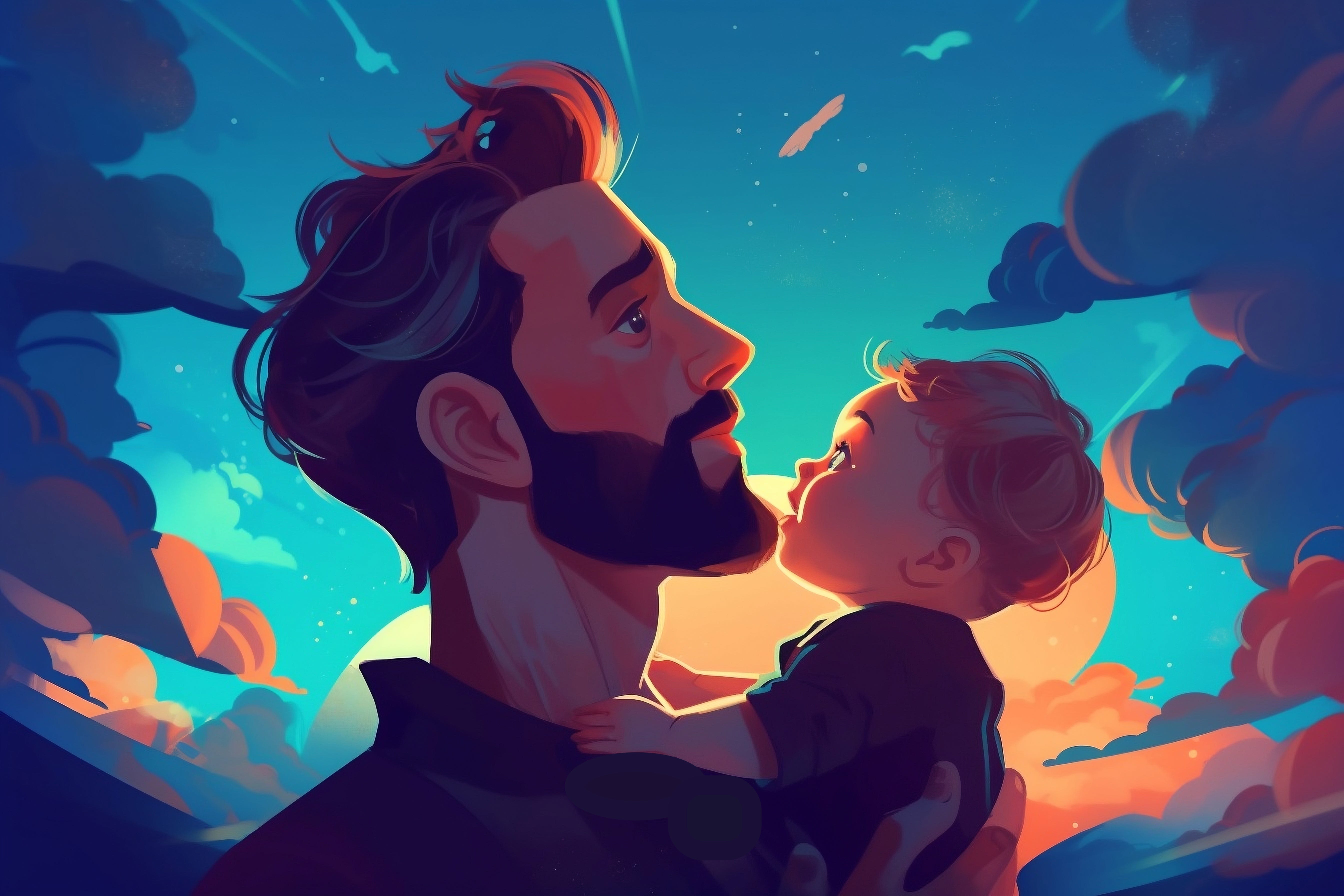
Before we get to the Prussian educational model in the next post, and how the technocracy demands that we sacrifice our children to it, like some sort of metaphorical Moloch, I want to tell you about myself and what the point of this Substack is. I’ve been married for 15 years to my wife Corissa. We have an amazing son who is now 12 years old. When he was born we were fairly normal (read: properly socialized) people, living in a beautiful house on the coast of Maine. But the idyllic charm of our lives quickly wore off as I found myself faced with certain decisions - for example - do I spend the weekend raking up thousands of acorns from our sprawling and highly manicured yard, or should I devote my time to our son, who was then a toddler? Should we put him in the twee Montessori school down the street, the one he has zero interest in attending, so I can get “back to work” - or should I take him for walks on the beach instead, having him learn the rhythms and cadences of the seagulls as they prowl the coast? If I decide on the latter, we’d better get a move-on, because once November hits, the winds whipping across the beach will make it hard to enjoy the experience. What to do?
I can tell you what we did. We threw that house on the market and moved to sunny Los Angeles. Here, we rented a charming lil’ 1950’s bungalow, where I had no obligation to perform any of the usual trappings of home ownership. No more raking acorns, mowing lawns, or painting trim. No more endless trips to the hardware store where our son made himself busy, while I talked to the paint department about color swatches. Instead, every morning we would walk 15 minutes in endlessly perfect LA weather to the neighborhood park, where he would play for hours with all the Russian and Ukrainian kids who frequented the playground. As we would walk back to our new home - he in his stroller and me chatting to him about our day - he would nod-off to the sounds of birds chirping contentedly in the purple flowered jacaranda trees which lined the streets.
Is the point of this Substack to live a life where you can avoid raking up acorns? Well, yes and no. That move, from the drudgery and seasonal loneliness of Maine, was the inciting incident in the story arc of our lives. It took some courage to make that move - away from our extended families - especially since we had a toddler. But I think we saw where that life was going, and we didn’t like the outcome. Society has been traveling down that worn rut of complacency since the mid-1800s when Horace Mann foisted “public” education onto the Western world. Since then, humans have followed a predictable trajectory - you get married, buy a house, plop your kid into the closest school, and then work like a dog until you no longer serve the technocratic bureaucracy, and are rendered obsolete (retired). It’s a slow death. Biological entities are meant to push their bodies and minds in challenging ways - we actually get stronger from exertion, whereas man-made creations become weaker with wear - they break down. That’s why we devote so much time to maintaining our possessions, for without our care they would deteriorate to the point of uselessness. The world, in a sense, is inverted. We live our lives as worker bees, buzzing around to keep the technocracy humming, while we outsource the care of our children, our genetic line, to strangers. It’s Plato’s Allegory of the Cave. We’ve been convinced that this is the way we’re supposed to live, which is laughable, or worthy of tears, depending on your disposition.
Let’s get back to our protagonist above, one Hector Alonzo. He already doesn’t like school on the very first day. This is not unusual, in fact, I suggest it’s the norm. Without everyone telling kids like Hector how great school is, he would undoubtedly jump out the closest window and hitchhike home. It’s always been this way. Here’s a quote from 1913 to better illustrate just how awful school can be for most kids:
In 1909 a factory inspector did a survey of 500 working children in 20 factories. She found that 412 of them would rather work in the terrible conditions of the factories than return to school.
Helen Todd. “Why Children Work”
McClure’s Magazine, April 1913
Presumably, Ms. Todd was conducting an informal survey and did not necessarily probe for a rationale from her respondents. But if we examine John Taylor Gatto’s main thesis (the former NYC Teacher of the Year from above) perhaps we can isolate some variables that would provide justification for 170-or-so years of consistent, almost visceral disdain, for public eduction from students.
On schooling he posits:
It confuses the students. It presents an incoherent ensemble of information that the child needs to memorize to stay in school. One sees and hears something, only to forget it again.
It teaches them to accept their class affiliation.
It makes them indifferent.
It makes them emotionally dependent.
It makes them intellectually dependent.
It teaches them a kind of self-confidence that requires constant confirmation by experts.
It makes it clear that they cannot hide, because they are always supervised.
We can extrapolate what life might be like for the Hector Alonzos of the world, the ones who do not like school from the onset, but are forced to continue. You can imagine Hector being addicted to the escapism of his iPhone by age 10; a soul lost to the digitized hum of a cheaply constructed metaverse. By age 18, he might be on an SSRI to combat feelings of worthlessness and suicidality. At 50, as he nears “retirement”, he might be thinking, “What in the actual fuck is the point of all of this?” By then, he might resign himself to another 15-20 years of planned obsolescence. The Hectors of the world need a paradigm shift, and so did we. We needed to exit the metaphorical cave, full of projections, and enter the glorious, God-given light of the ever-expanding universe.
In opposition to the thesis above, we want kids in the RYOK universe to be:
Confident
Conscientious
Conscious
Creative
Instinctual
Joyful
Proactive
Responsible
Self-Sufficient
Sovereign
My wife and I, like most parents, want to be devoted stewards of our child, guiding him to the highest expression of himself. But most things in our culture attempt to separate we parents from our children, so that all decision making bypasses our better judgement: school, screens, sports, peer groups, “experts”- doctors, coaches, etc. But does anyone know what’s best for our kids better than we do? I can tell you after 12 years of careful consideration, where our son has been pretty much within a 50-foot radius of me for 14 hours a day, that they do not. How could they? This philosophy (of taking full-time responsibility for our child) has led Corissa and I to a relentless cycle of consideration. We are always comparing and contrasting the way we are living to some ever-evolving ideal.
But what’s the alternative? You give up school and then what? To start, now that it’s fortunately no longer as heavily regulated in most states (thanks to all those plucky parents who took their respective states to court in the 1970’s), the answer is homeschooling and what is called “unschooling.” While this is a great start, and there will be much more on the subject in future posts, it’s not everything. The RYOK universe is about removing yourselves from the authority of all credentialed experts, not just teachers and their administrators. But regarding homeschooling, there’s still work that needs to be done, even 40-something-years later, convincing people that it’s a viable option, which will also be addressed in the next post.
Raising your own kids isn’t easy. It took us hundreds of hours of research, observation, and implementation…and to be honest, lots of trial and error. Has it been a breeze to be a stay-at-home father? No. It’s been a humbling experience, but only because I haven’t been meeting my societal obligations. I’m considered a “net negative” to the system; someone who’s not living up to their taxable expectations. Of course, I wouldn’t trade it for all the money in the world. This type of devotion is reciprocal; it benefits both my son and I, and when you think about it, of course it does. Nature wouldn’t have it any other way. A technocratic societal structure only takes, there is no true reciprocation - the only things it “gives” humans are the things they need to stay alive so they can feed the machine. It’s an abomination, existing in opposition to the natural order. Putting your family first, love first, is the only way to restore the balance.
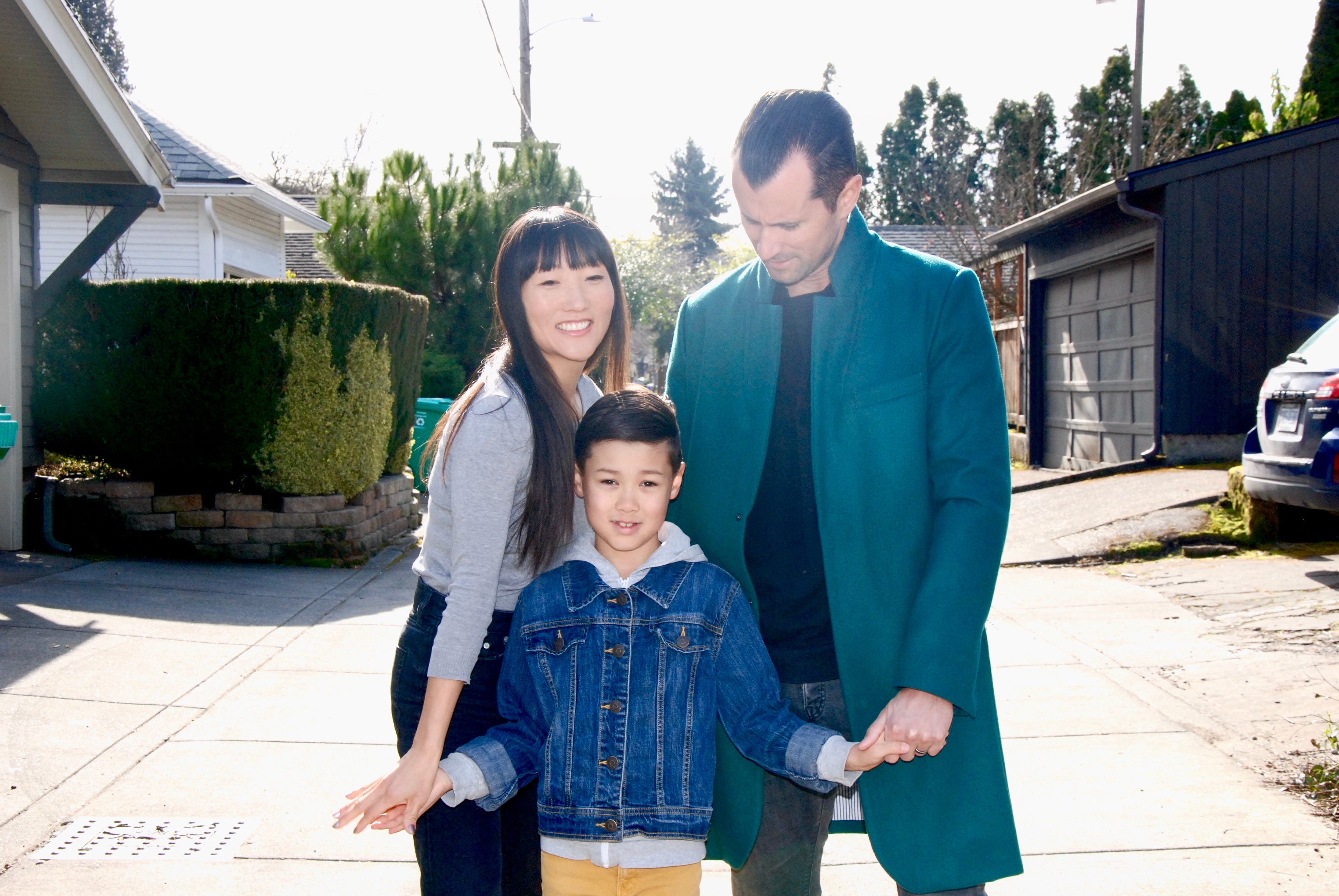
The idea of Raise Your Own Kids, the RYOK universe, is about much more than homeschooling or even unschooling. It’s about health, nutrition, fitness, sovereignty, spirituality, adventure, and even finance (so you can afford to live outside the matrix). It’s about connecting to other people who have the same ideals. For now, I hope you signup for this Substack. New posts will have resources, tips, anecdotes, long-form stories, and updates on our personal journey, as we continue to travel the country (and the globe) unschooling our son, and de-schooling ourselves, while trying to keep our family as sovereign from the system as possible. Thanks for reading. I hope you become an active part of the RYOK universe, where no one but you determines how you’re going to live and how you’re going to raise your kids.

THE TRANSMISSION CONTINUES...
To hear the original raw frequencies from the Bathroom Booth of Truth, subscribe to the Chronic Conundrum Podcast on Apple or Spotify.
For the complete blueprints of the architecture of sovereignty, visit chroncon.com.
Stop asking for permission. Start the transmission.
— The Archivist